
Why can the back of a handsome farmhouse mirror tell you more than the front? Because convincing paint, cloudy glass, and rusty hardware can be added, while the concealed construction often reveals whether you should pay an antique premium, negotiate for an old decorative frame, seek expert advice, or leave the mirror behind.
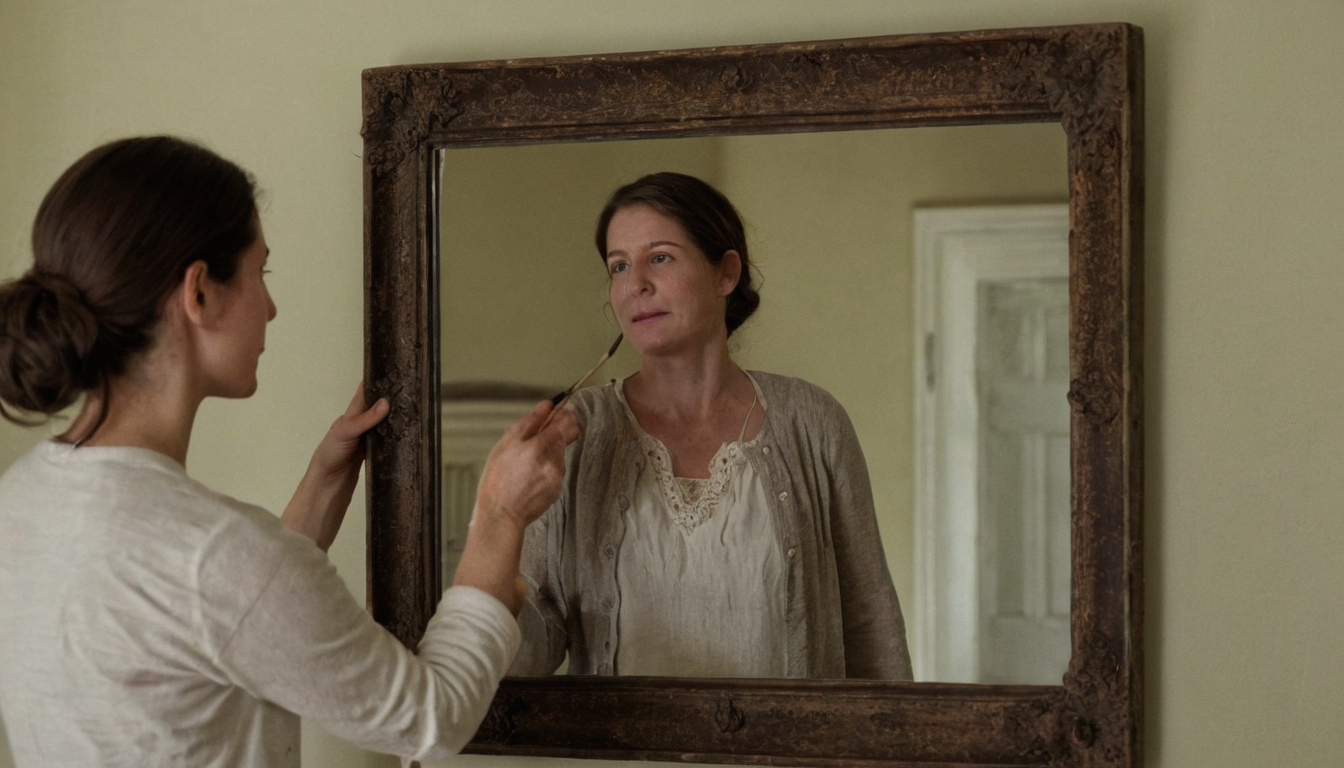
Inspect the Back Before You Buy a Farmhouse Mirror as an Antique shown with practical context cues.
An antique farmhouse mirror must be dated as several separate parts
A farmhouse mirror deserves one date only after its frame, mirror plate, backing, fasteners, and hanging hardware have been examined separately. Cottage, vernacular, and utility mirrors often contain parts from more than one period.
For practical buying, antique commonly means at least 100 years old, though customs rules, marketplaces, and sellers may use the word differently. Describe age as a range unless a label, patent, provenance, or documented comparable supports a narrower date.
- Original antique mirror: The period frame, period glass, backing, and fixings share a convincing wear history. Consider an antique premium if condition and attribution hold.
- Antique frame with replacement glass: The frame is old, but fresh fixing holes, an altered rabbet, or modern plate indicate replacement. Buy for the frame and negotiate below an all-original example.
- Period assembled mirror: Old components do not share one construction history. Pay decorative value unless documentation explains the assembly.
- Modern reproduction: The frame, glass, uniform sheet backing, finish, and fittings are recent. Reject an antique premium.
- Inconclusive: The evidence conflicts or cannot be seen safely. Pause for expert review if the asking price is substantial.
An old frame with new glass is not necessarily a dishonest farmhouse mirror
Replacement mirror plate can be a sensible repair after breakage, severe silvering loss, or unsafe damage. An accurate description might read “nineteenth-century frame with later mirror plate,” with later backing or hanging hardware identified where visible.
Replacement glass matters most when a frame has a known maker, rare carving or paint, documented provenance, or unusual original glass. For a plain utility frame bought as farmhouse wall decor, sound later glass may improve usability even though it reduces originality and should lower the price against an otherwise comparable original example.
No single age clue can authenticate a farmhouse mirror
One rusty screw proves only that one screw rusted. Black spots can result from genuine silvering failure, later moisture damage, or manufactured antiquing. Chipped paint can reflect hard use, deliberate distressing, or recently added damage. Even old glass can be fitted into a newly made frame.
Look for agreement among frame joinery, rabbet wear, mirror edges, backing, fasteners, and redundant holes. Record the result as likely original, likely replacement glass, assembled from old parts, modern reproduction, or inconclusive. The next useful evidence sits out of sight: how do backboards and fasteners help date a farmhouse mirror?
How do backboards and fasteners help date a farmhouse mirror?
The back of a farmhouse mirror often keeps better dating evidence than its decorative face. Board preparation, oxidation, tool marks, fastener types, dust shadows, and repeated holes can reveal assembly or alteration, provided the clues show consistent use rather than theatrical rust.
Backboard wear should correspond with the farmhouse mirror frame
A backboard that has remained in one rabbet for years usually carries related evidence at each point of contact. Inspect the following without removing the board:
- Look for agreement: Worn board edges should meet worn areas of the rabbet, while dust shadows and oxidation should follow the fixing positions.
- Question fresh work: Bright saw cuts, shifted grime lines, splintered holes, and pale wood beneath dark fasteners suggest later opening or replacement.
- Count redundant holes: Several generations of nail or screw holes can mark repairs, replaced glass, or a changed backboard.
- Allow for honest disturbance: Cleaning, damp storage, and competent restoration can produce uneven colour without proving deceit.
Solid boards may show plane or saw marks. Other assemblies use plywood, hardboard, cardboard, or sheet backing. Material supplies only a broad limit because restorers reused old boards and workshops adopted newer materials unevenly.
Fastener chronology provides a range rather than an exact date
Cut nails, wire nails, brads, slotted screws, glazing points, staples, and flexible tabs belong to overlapping periods of manufacture and use. A slotted screw may be old, salvaged, or installed during a sympathetic repair. A modern staple dates that fastening operation, not necessarily the frame.
Matching oxidation, compressed wood, settled dust, and holes used only once carry more weight together than one rusty nail. Bright screw heads in enlarged holes, mixed fasteners, and unused earlier holes point toward intervention.
A sealed or papered back must not be opened casually
Stop before lifting brittle paper, labels, inscriptions, or tightly fixed boards. Opening a mirror can tear documentary evidence, loosen gesso, crack glass, or disturb failing silvering. Mold, broken glass, unknown coatings, or a board under strain calls for a frame or glass conservator.
The Library of Congress preservation-framing guidance concerns paper-based objects rather than mirrors. Its advice about chemically stable materials, moisture barriers, sound rabbets, and pins or brads instead of tape nevertheless explains why a later conservation back may represent responsible work rather than fakery. Once the back has spoken, what does genuinely old mirror glass look like?
What does genuinely old mirror glass look like?
Waviness, bubbles, black edges, foxing, variable thickness, and losses in the reflective coating are supporting clues, not proof. The manufacturing method, edge treatment, reflection, backing system, and deterioration pattern must agree before a mirror plate can reasonably be described as period glass.
Reflection distortion can support but cannot prove the age of mirror glass
Earlier blown, cast, rolled, and polished glass can bend reflected straight lines or produce small local ripples. View the plate from an angle in oblique daylight, using a door casing or window muntin as the reflected line. Inspect any exposed edge without lifting the glass from its rabbet. Uneven thickness, bubbles, and hand-finished edges can support age, but reproduction glass can imitate those effects.
Natural silvering loss usually follows physical causes rather than decorative patterns
Natural silvering loss often begins where moisture reaches an unprotected edge, a scratch breaches the backing, or a protective coating fails. Look for irregular blackening, translucent pinpoints, cloudy patches, and losses connected to edges or damage. Evenly scattered spots, repeated mottling, and balanced smoky areas may indicate factory antiquing. A front photograph cannot conclusively date the reflective coating.
Suspected mercury-backed mirror glass requires professional handling
Tin-mercury amalgam backing belongs to an older mirror-making tradition, while chemically silvered plates became the usual later method. Production and reuse overlapped, so backing type alone does not supply a firm date. Do not scrape, test, break, or dismantle a suspected mercury-backed plate. Leave the mirror assembled and consult a glass conservator about examination, transport, or disposal.
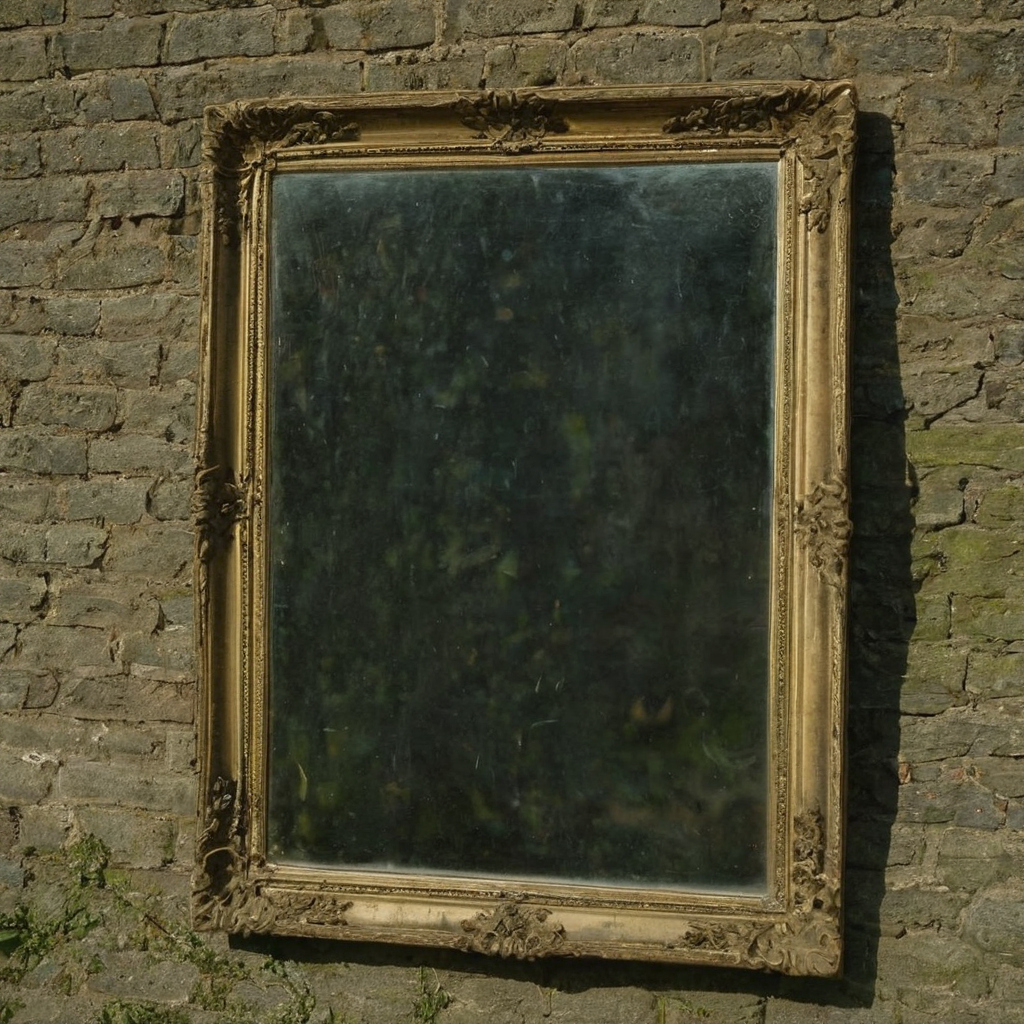
What does genuinely old mirror glass look like shown as an editorial planning reference.
Once the plate has yielded what it safely can, frame joinery, labels, and hanging hardware may reveal alterations the glass cannot.
Frame joinery, labels, and hanging hardware reveal later alterations
The frame of a farmhouse mirror may be old even when its glass and hanging system are not. Joinery, molding profiles, wood, finish layers, labels, stamped fittings, and abandoned holes can establish a defensible date range. Newly fitted D-rings or wire usually record safer hanging, not a modern frame.
Farmhouse mirror joinery must agree with the claimed production method
Vernacular frames may use mortise-and-tenon or half-lap joints, sometimes pegged or nailed. Workshop and factory frames often have mitered corners strengthened with splines, keys, nails, or mechanical fasteners. Staples and flexible framing tabs suggest later assembly or alteration, but one modern fastener does not date the wood beneath it.
Machine-cut joints do not automatically disqualify an antique frame. Mechanized molding and joinery belong to established workshop production as well as modern manufacture. Look for matching tool marks, oxidation inside joints, consistent shrinkage, and finish continuing naturally into sheltered areas. Rough saw cuts and crooked nails can be old, repaired, or deliberately theatrical.
Finish alone settles little. Milk paint, oil paint, shellac, varnish, gilding, and later coatings may sit in several layers. Sanded edges with dark glaze dabbed uniformly into corners deserve suspicion. Irregular wear at handled edges is more persuasive, though a conservator may be needed to identify a coating securely.
Labels and patents can narrow a farmhouse mirror date
Photograph a label straight on and under raking light before touching it. Transcribe every surviving letter, number, border, and punctuation mark. Patent records, registered-design records, trade directories, and period catalogs can test a maker, address, retailer, or stamped fitting.
A paper label is useful only if its attachment appears undisturbed. Fresh adhesive, a label crossing later holes, or a retailer mark unrelated to the frame calls for caution. Do not wet, peel, or scrub it. The National Park Service Museum Handbook provides a conservative model for documenting and preserving collection evidence.

Frame joinery, labels, and hanging hardware reveal later alterations shown as a planning reference for layout, scale, and material decisions.
Replacement hanging hardware should be judged for safety as well as age
Modern D-rings, wire, or a cleat can be a sensible repair. Inspect the upper rail for splits, loose joints, corroded wire, shallow screw purchase, and abandoned holes. New hardware fixed firmly into sound wood differs from a new frame whose staples, backing, finish, and hangers share the same manufactured age.
Verify the mirror’s weight and wall construction before selecting hangers. Old plaster, masonry, timber studs, and plasterboard require different fixing decisions. With those clues recorded, use a five-minute farmhouse mirror inspection before discussing price.
Use a five-minute farmhouse mirror inspection before discussing price
A useful market inspection starts with permission to turn the farmhouse mirror over. Photograph and classify each component before accepting the seller’s use of “farmhouse” or “antique.”
Photograph the entire farmhouse mirror before photographing clues
- Photograph the front, back, profile, corners, backboard, and hanging fittings.
- Record the overall dimensions and, if available, the verified weight.
- Inspect glass edges, rabbet wear, fasteners, redundant holes, labels, and repairs.
- Note damp staining, odors, loose joints, flaking finish, and active corrosion.
- Classify the evidence as consistent, altered, modern, unsafe, or inconclusive.
Sold comparables must match the farmhouse mirror’s actual components
Group sold auction records by original glass, replacement glass in an old frame, or modern reproduction. Match dimensions, materials, provenance, condition, sale date, and buyer’s-premium treatment. Asking prices prove little. Consistent evidence may justify an antique premium; altered parts call for negotiation; costly uncertainty calls for expert review; modern or unsafe construction calls for walking away.
One practical question remains before hanging the purchase: can an antique farmhouse bathroom mirror withstand humidity?
Can an antique farmhouse bathroom mirror withstand humidity?
An antique farmhouse bathroom mirror belongs only where condensation, direct splashing, and persistent damp are controlled. Historic silvering, wood backboards, gesso, paint, veneer, and iron fasteners can deteriorate under unstable moisture. A ventilated powder room presents less risk than a frequently steamed family shower room.
A farmhouse bathroom mirror needs ventilation and a condensation check
Run the room normally, then check whether the glass, wall, or backboard remains damp. The EPA moisture guide advises correcting condensation and damp spots promptly. Avoid direct splash zones, radiators, vent drafts, and damp exterior walls. These choices belong alongside planning wall finishes around damp and reversibility.
Reject bathroom placement if silvering is actively lifting, gesso is flaking, joints are open, fasteners are rusting, mold is present, or the glass is loose.
Bathroom mounting must support the farmhouse mirror’s verified weight
Weigh the complete mirror and inspect the frame before choosing fittings. Masonry, timber studs, plaster and lath, and plasterboard each require suitable anchors installed according to the hardware maker’s load instructions and local rules. Never trust old wire, tiny D-rings, or one convenient nail above a basin.
If the room stays wet, keep the antique elsewhere or choose a reproduction. Households balancing fragile surfaces against children, pets, splashes, and routine wiping may also benefit from choosing decor that tolerates everyday cleaning and wear. Buy the old mirror for what its separate parts honestly prove, then hang it where those parts can survive.

Can an antique farmhouse bathroom mirror withstand humidity shown with finish, fixture, and clearance relationships visible.
Questions to ask before buying a farmhouse mirror
How can I tell whether a farmhouse mirror has replacement glass?
Look for fresh fixing holes, an altered rabbet, bright cuts, modern glazing points, or a mirror edge whose wear does not correspond with the frame. Replacement glass should affect the description and price, but it does not make an old frame worthless.
Does black spotting or foxing prove that mirror glass is antique?
No. Natural silvering loss, later damp damage, and manufactured antiquing can all produce spots or cloudy areas. Judge the pattern alongside the glass edges, reflection, backing, and construction.